Waltham Wood Flooring has spent more than twenty years on wood flooring in Cambridge, and most of that work sits inside buildings finished long before anyone thought of a floor as a feature. We sand, repair and refinish what is already down, and we install new material only where nothing underneath is worth saving. The first question a homeowner here asks us is almost always the same one: is this floor worth keeping?
Usually it is. A Cambridge floor that has been under carpet since the 1970s tends to arrive in better condition than its owner expects, because the carpet pad and the tack strip took the wear that shoes would otherwise have taken. What it needs next is a measurement rather than a guess, and the measurement is how much board sits above the tongue.
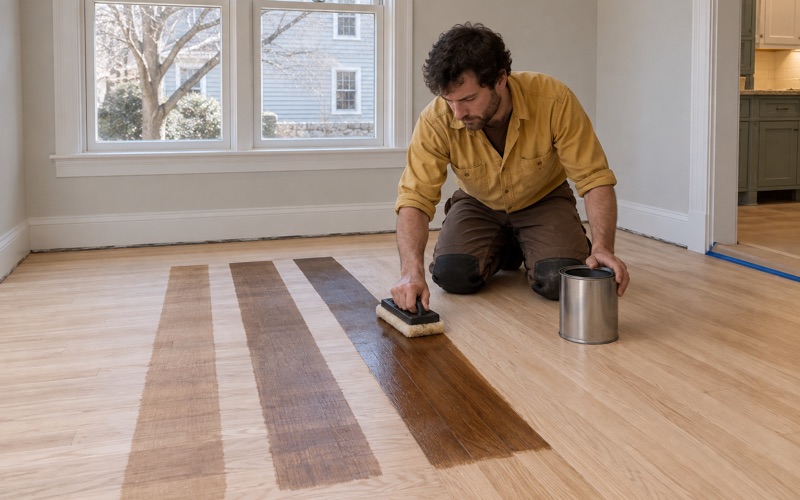
We work the same way in a two-family off a side street as we do in a unit in a building finished last decade. Identify the material, measure the moisture, quote the stairs separately from the rooms, and lay stain samples on your own floor in your own light before anybody commits to a color. What follows is what that process runs into in Cambridge in particular.
The Cambridge buildings old enough to be on somebody’s register
Cambridge pays for preservation out of money it decided to raise for itself. Residents voted in 2001 to adopt the Community Preservation Act locally, which let the city put a 3 percent surcharge on property tax bills, and the fund has been paying out ever since. Each year at least 10 percent of that revenue has to go to each of three categories: open space, historic preservation and community housing.
Where that money has gone
Through fiscal year 2025 the city had appropriated $301.7 million for CPA projects, $241.5 million of it for affordable housing initiatives. On the preservation side, the examples the city itself gives are exterior work: the Dance Complex facade in Central Square, and the restoration of exterior details at 1627 Massachusetts Avenue, a building originally put up in 1862 and now being renovated into affordable housing.
That distinction is worth reading closely if you own an old house here. The preservation work the city points to is the work the street can see, and the surfaces inside a building stay the owner’s problem. Floors are interior finish, and that is the part of an old Cambridge building we are hired to solve.
What counts as a historic resource
The eligibility test the city applies is narrow and worth knowing. A historic resource qualifies when it is listed on the state register of historic places, or when the local historic preservation commission finds it significant in the history, archaeology, architecture or culture of the city. Nothing about a floor has to meet that test for the floor to be worth saving.
In practice the buildings that would pass it and the buildings with the oldest floors are largely the same set. A house a commission would call significant is a house whose boards were laid by hand, blind-nailed through the tongue with cut nails, and never intended to come back up.
Looking for wood-flooring closer to Winchester? See Winchester Wood-Flooring.
What a pre-1940 floor here is made of, and how much of it is left
Cambridge holds 54,840 housing units, and 25,767 of them, 47.0 percent, were built in 1939 or earlier. Add what followed through the 1970s and 67.9 percent of the city’s housing predates 1980. Two floors in three are older than the people walking on them, which turns the opening question from what finish you want into what is still there to take a finish.
Age also changes how a floor behaves through the year. Boards in a house heated hard through a New England winter open into gaps that close again by July, and we would rather explain that cycle before a refinishing than be called back in January about a crack that is seasonal. Where the gapping is permanent instead of seasonal, that is a different finding and we treat it as one.
Reading the boards
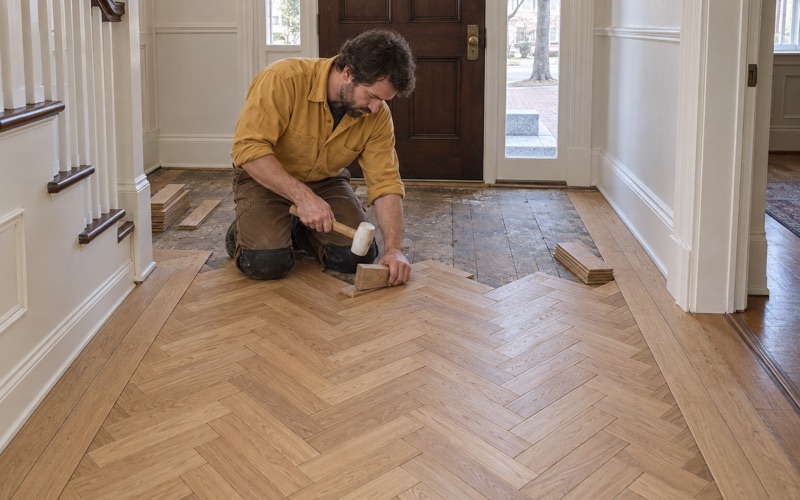
Under the carpet in a house from that era we usually find red oak strip flooring, sometimes maple, and sometimes eastern white pine on an upper floor or a back hall where the original budget ran thin. Narrow strip is the common case, but herringbone and wide plank both turn up, and each changes the sanding plan. We identify species and layout before a drum sander comes off the truck, because a grit sequence that suits oak will chew pine.
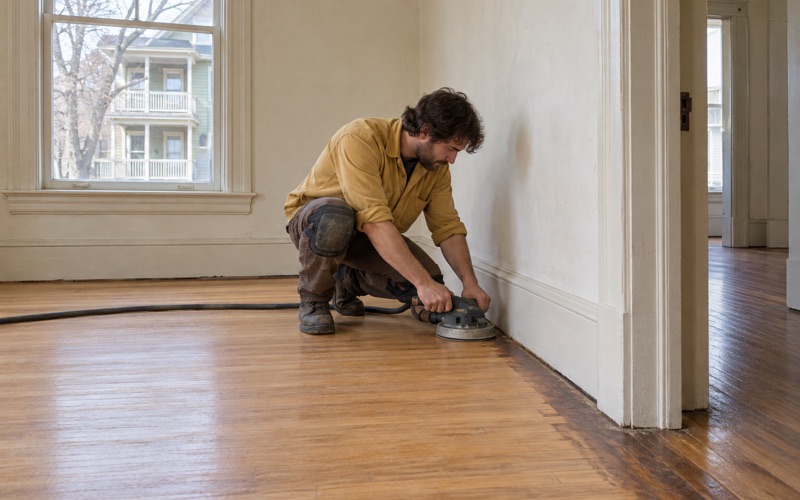
What sits on top of the wood matters just as much. Shellac finish, decades of wax residue and built-up cleaning-product film all have to be tested for and stripped, or a new coat bonds to the residue instead of the wood and lifts out of the traffic lanes inside a year.
How much thickness is left
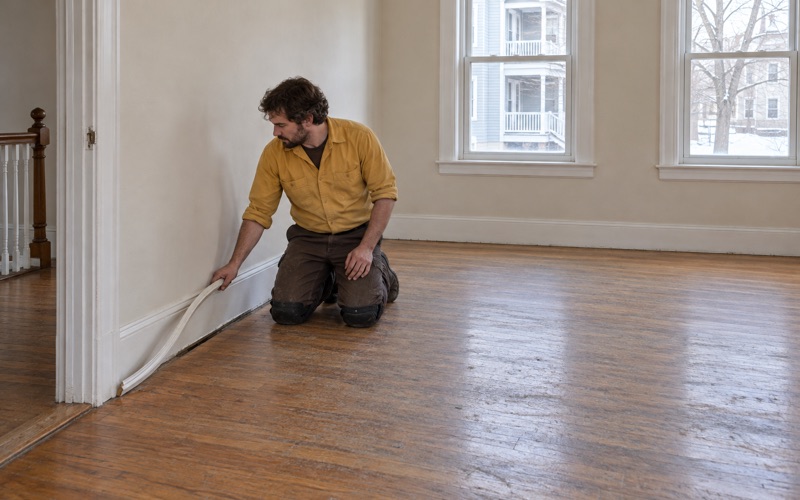
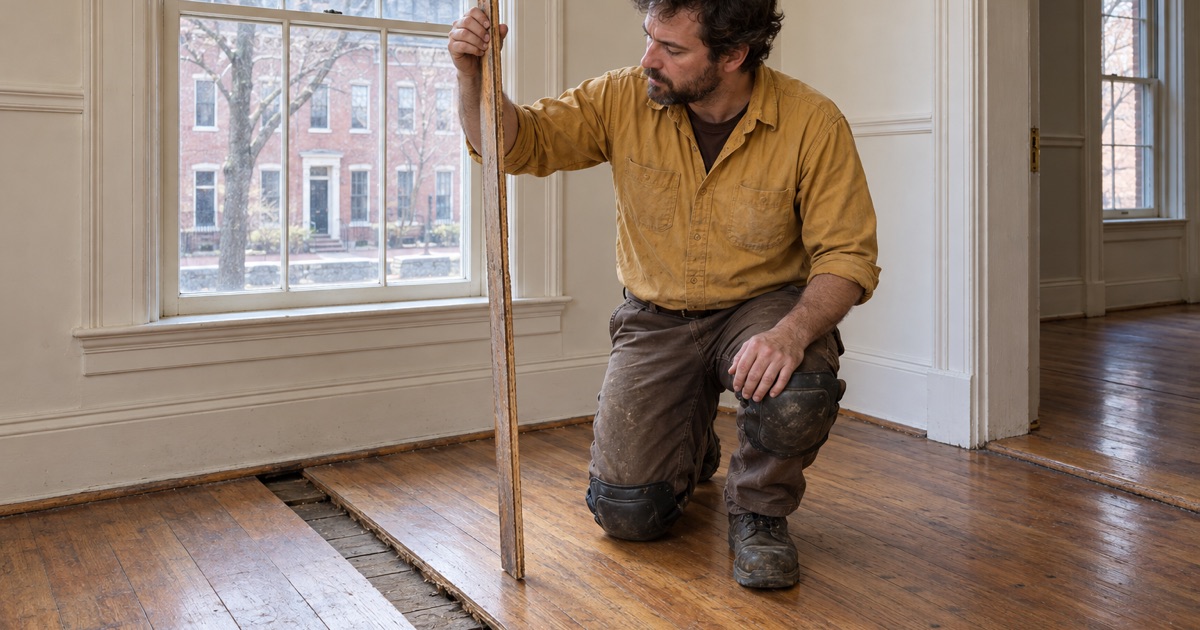
A solid tongue and groove floor can only be sanded down to the top of its tongue, and every refinishing in its life has already spent some of that budget. We lift a board at a threshold or pull a register cover and measure real thickness rather than estimating it from the surface. When the answer is that the floor has one pass left, we say so and plan for it, which often means a screen and recoat or an orbital sander instead of a full cut with a drum.
Old resilient floor tile and the black mastic under it is the other thing we look for before anything starts. Where we find it, we identify it, leave it undisturbed, and stop the work until the right trade has handled that layer.
Matching an original Cambridge floor rather than replacing it
When a floor is old enough to be part of what makes a building worth preserving, tearing it out is an expensive answer to a question nobody asked. Matching what is already down costs more in labor and far less in material, and it leaves the room reading as the room instead of as a renovation.
Weave-in repairs and board replacement
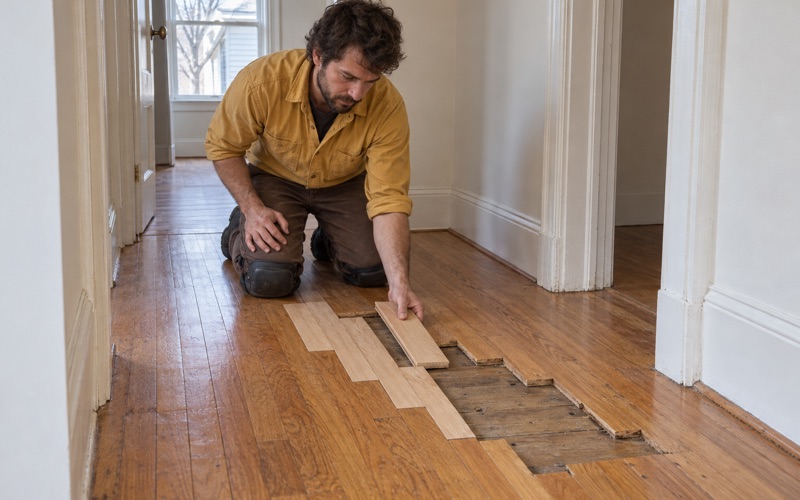
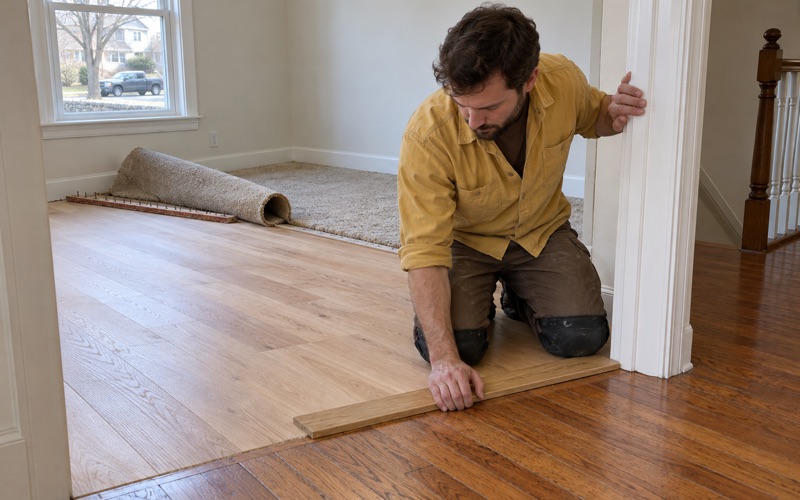
Steam radiators leave holes. When a radiator and its pipe come out, the gap is not something to fill: we cut matching boards and weave them into the surrounding courses so the repair runs with the grain and the new seams land where seams already exist. The same approach covers a line where a wall came down, a patch where an outlet moved, and a closet that was opened into a room.
Board replacement in the middle of a field of old wood is a matching problem before it is a carpentry problem. Species, width, age and the way the original was cut, whether plainsawn or rift and quartersawn, all have to line up, and the color has to be brought to the neighboring boards rather than to a sample chip.
Color, stain and what can go down here
Old oak in these houses has usually gone orange under decades of oil-modified polyurethane. If you want it to stay that way, we match it; if you want it lighter, a waterborne polyurethane and a different stain will get there. Either way the samples go down on your own floor, because a stain reads differently on hundred-year-old wood than it does on a board in a showroom.
Finish choice is not wide open in this state. Massachusetts sets its own VOC limits for wood coatings that run tighter than the federal ones, so the compliant products are a narrower set than a national spec sheet suggests. Waterborne, oil-modified and hardwax oil all have versions that comply, and sheen level stays a separate decision from the product itself.
Stairs, thresholds and the small pieces
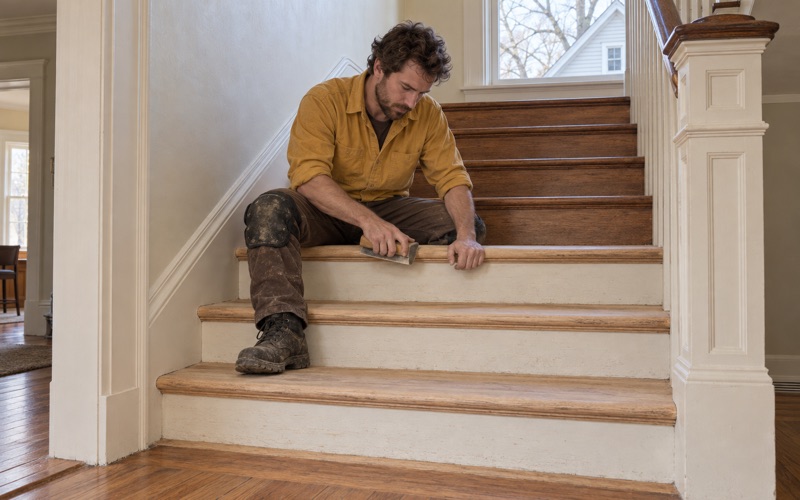
Stairs are quoted tread by tread. A staircase is a stack of individual pieces, treads and risers and nosing, and pricing it off the square footage of the rooms it connects produces a number that is wrong in one direction or the other.
Reducers, thresholds and quarter round are the same kind of detail. They are small, they are the first thing a person looks at when the job is done, and they are where a floor that was matched carefully can still end up looking patched.
Newer units, rented units and floors below the main level
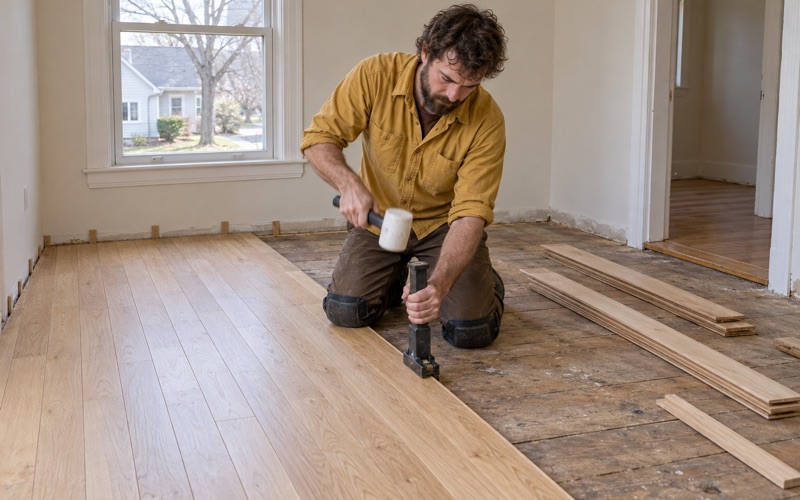
Not every floor here is old. 11,016 Cambridge units, 20.1 percent of the stock, date from 2000 or later, and those buildings raise different questions: what the subfloor actually is, whether an engineered wear layer is thick enough to take a sanding at all, and how to repair a prefinished floor whose exact product has since been discontinued.
Owners, landlords and two-families
Two-thirds of occupied units in Cambridge are rented, 32,897 of 49,444, so a good share of our calls come from owners and managers rather than from the person living on the floor. We write itemized estimates for that work, which is what Massachusetts requires before a tenant can be charged for damage to a floor.
Owner-occupied two- and three-families we work one floor at a time wherever the layout allows it. It stretches the job out in calendar days, and it means the household on the other floor keeps living in the building while its neighbor’s unit is off limits.
Moisture, water damage and lower levels
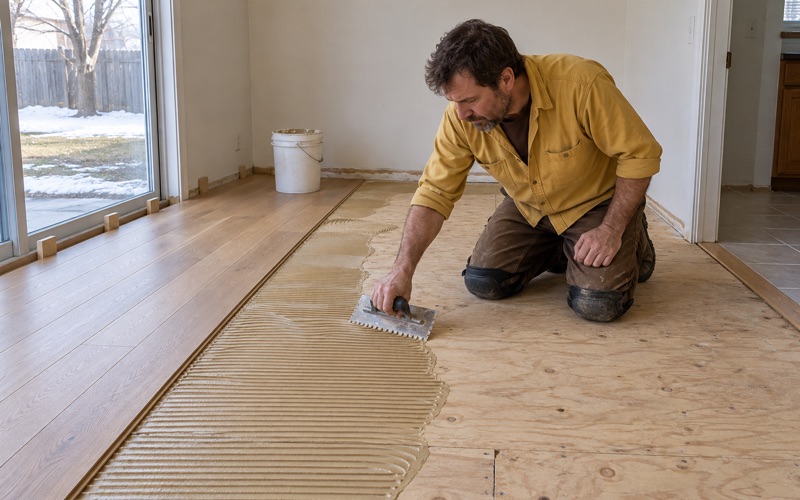
A floor below the main level gets matched to the moisture we actually measure there with a meter, not to what the rest of the house is reading. That usually points to engineered wood over a vapor retarder rather than solid material, and it makes the acclimation period something we wait out rather than compress.
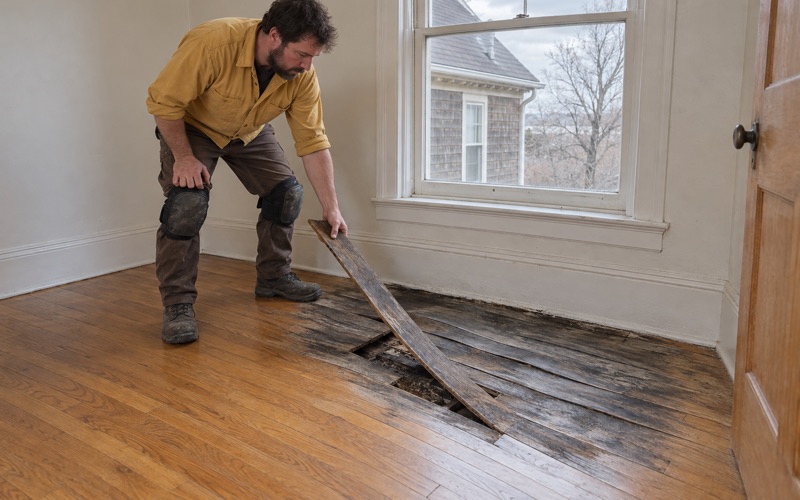
When water has already done its damage, from a burst pipe in February or an appliance that overflowed, we trace how far it traveled, dry it, and read it with a moisture meter before pulling a single board. Cupping frequently flattens on its own once the moisture equalizes, and a floor torn out in the first week is often a floor that never needed to come out. We document the damage room by room for the adjuster in either case.
Scheduling around the noise rules
One piece of Cambridge scheduling catches contractors who do not work here often. Construction noise audible 50 feet from the lot line is not allowed from 6 p.m. until 7 a.m. on weekdays, or before 9 a.m. on Saturdays and holidays, and Sunday work needs approval from the Police Department. Sanding is loud, so we build the schedule around that window rather than discovering it on the second morning.
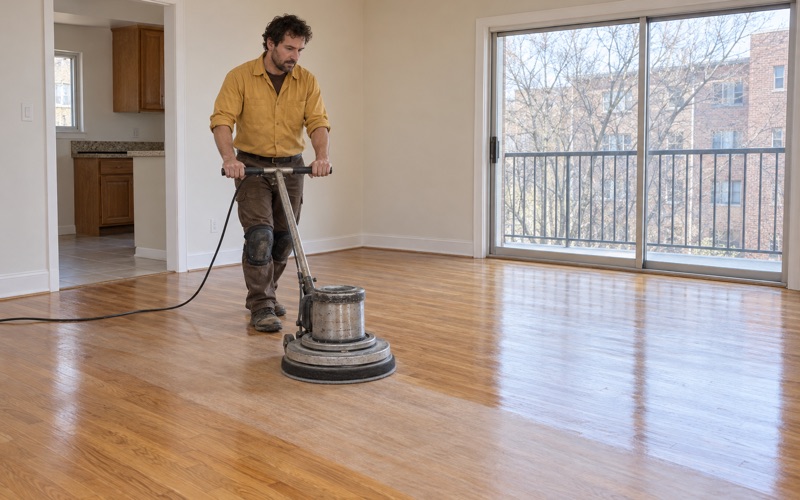
That schedule also has to account for the household staying put. We run dustless sanding with HEPA vacuum collection on the machines so the rest of the building stays usable, but a room under a drum is still a room nobody crosses until the finish has hardened.
- 20+ Years On Wood Floors
- Written Itemized Estimates
- Stain Samples On Your Own Floor