
Waltham Wood Flooring refinishes rental property floors across Waltham, MA, serving surrounding cities including Belmont, Watertown, Lexington, Newton, Arlington, and after 20+ years working for owners here the job has a shape of its own. There are 12,828 renter-occupied units in this city, and a turnover floor is not a design project — it is a scheduled piece of work between one lease ending and the next beginning.
That changes what matters. The scope has to be honest about whether a recoat will carry the unit another tenancy or whether the floor has reached the point of needing a full sand, because the wrong answer either wastes a week of vacancy or produces a floor that fails during the next lease. The estimate has to arrive quickly and be specific enough to act on.
It also has to be written properly. Massachusetts does not permit a landlord to charge a tenant for ordinary wear, and a deduction for genuine damage needs an itemized written estimate behind it. We write ours to be usable as that document: each area described, each piece of work priced on its own line, with condition recorded rather than characterized.
Turnover Work Runs To A Calendar
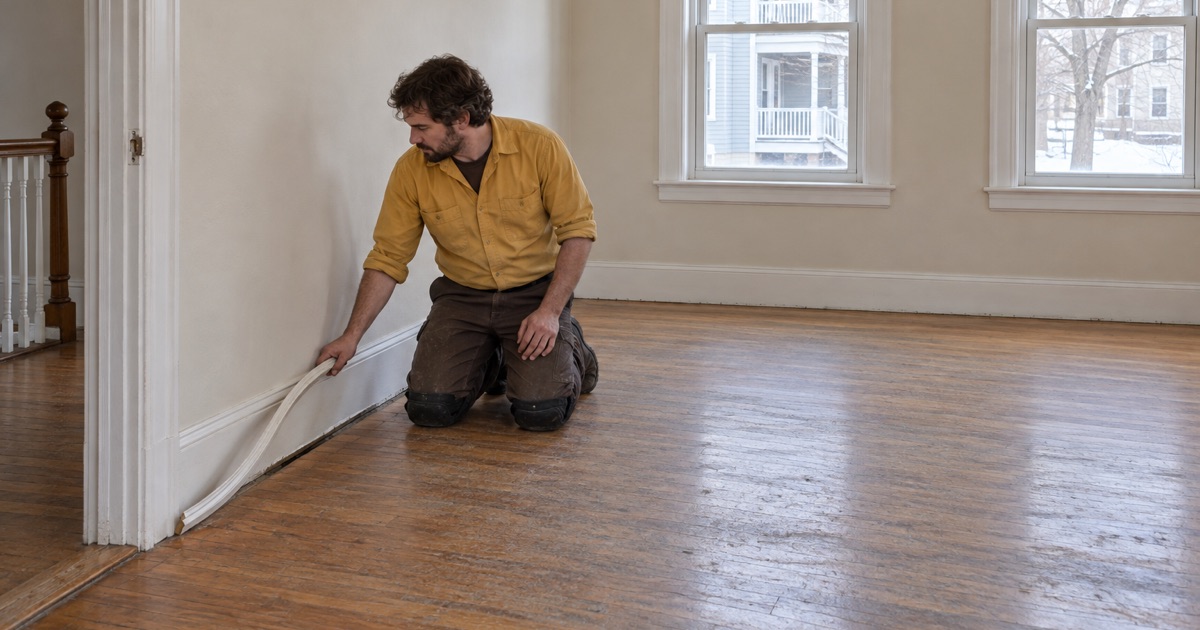
The schedule is the constraint in this work, and everything else is arranged around it. A floor that is perfect a week after the new lease starts has failed at the only thing that was asked of it. We would rather commit to a smaller scope that lands on the date than to a larger one that does not.
Scoping Against The Vacancy Window
We look at the floor against the dates you actually have. A screen and recoat fits almost any window; a full sand with stain needs a longer run and a cure period at the end. Knowing which one is needed before the previous tenant leaves is what keeps a unit from sitting empty an extra week.
Recoat Or Full Sand Between Tenancies
Where the wear is still confined to the coating, abrading and recoating restores the whole floor in a day at a fraction of the cost. Once the bare wood has grayed or taken a stain, a recoat seals the problem in rather than removing it. We test in several rooms, since one bedroom is often in a very different state from the hall.
Multiple Units And Repeat Work
Owners with several units get more value from a consistent specification than from a cheaper one-off: the same finish, the same sheen, and a record of what each unit has had done. That makes the next turnover a known quantity and makes it obvious when a particular floor has reached the end of its sanding life.
Wear And Tear Against Chargeable Damage
This is where an estimate either does its job or fails to, and the difference is in how it is written. An estimate produced for scheduling purposes and an estimate produced to support a deduction are the same work described to different standards. We write ours to the second standard every time, because you cannot go back and upgrade one after the floor has been sanded.
What Ordinary Wear Looks Like
Traffic lanes down a hallway, thinning finish in front of a sink, light scuffing and small dents are what a floor does under normal occupation. None of it is attributable to a particular event or a particular tenant, and none of it belongs in a damage claim. Recording it as wear is as important as recording damage.
The Itemized Written Estimate
Our estimates describe each affected area, state the condition found and the specific work required, and price each line separately. A single figure for a unit tells nobody anything and cannot be defended. An itemized document can be read by a tenant, an owner and, if it comes to it, by someone deciding between them.
Recording Condition At Turnover
Where there is a dispute in prospect, we photograph the floor room by room and note the location and nature of each defect before any work begins. That record costs nothing at the time and cannot be recreated once the sander has run, which is precisely when people discover they want it.
Two- And Three-Families With Somebody Still In The House
Across the city there are 2,921 two-unit and 3,217 three-or-four-unit buildings, and in a great many of them the owner lives on one of the floors. That arrangement changes the job more than the unit size does, because the client is also a neighbor and a resident for the duration. Everything about noise, dust and access is planned on that basis from the first visit.
Working One Floor At A Time
We refinish the vacant unit while the occupied one stays occupied. That means treating the stair door as a boundary, staging material so it never blocks the shared route, and planning which day each stage happens so the household above or below knows what to expect.
Containment, Extraction And Noise
Sanding runs to HEPA vacuum extraction rather than to collection bags, and the work area is sealed at its openings including return registers. Working hours for the noisy stages are agreed in advance, because a sander running in a two-family is audible in every room of the building.
Common Stairs And Access
Shared stairs and hallways stay usable throughout. Equipment and material are staged where they do not obstruct an exit, and the common areas are cleaned at the end of each day rather than at the end of the job. In a building where the owner lives on the other floor, that detail is the whole relationship.
Condominiums And Investor-Owned Units
A rental unit inside an association has a second set of rules on top of everything above. Those rules are private documents rather than public code, so they are not something a contractor can look up independently. Getting hold of them early is the difference between a straightforward turnover and an installation that has to come back out.
Association Documents And Underlayment
Requirements for hard-surface flooring above another unit sit in the master deed, bylaws and rules adopted under M.G.L. c.183A rather than in the building code, and they commonly specify acoustic underlayment performance or limit the installation method. We ask for those documents at quoting stage, because a requirement discovered after installation is expensive to satisfy.
Water From The Unit Above
When a leak comes down from another unit, the flooring work and the question of who pays are separate matters. We document what the water did with dated moisture readings and photographs, provide an itemized repair scope, and stay out of the argument between the owners and their carriers.
Floors Under The State Sanitary Code
Waltham’s Health Department runs a housing code enforcement program that inspects structural elements including floors and staircases under 105 CMR 410, either as part of its routine program or in response to an occupant complaint. Keeping floors structurally sound is a letting requirement before it is a presentation one.
- 20+ Years On Wood Floors
- Written Itemized Estimates
- Stain Samples On Your Own Floor